 Buying Guide
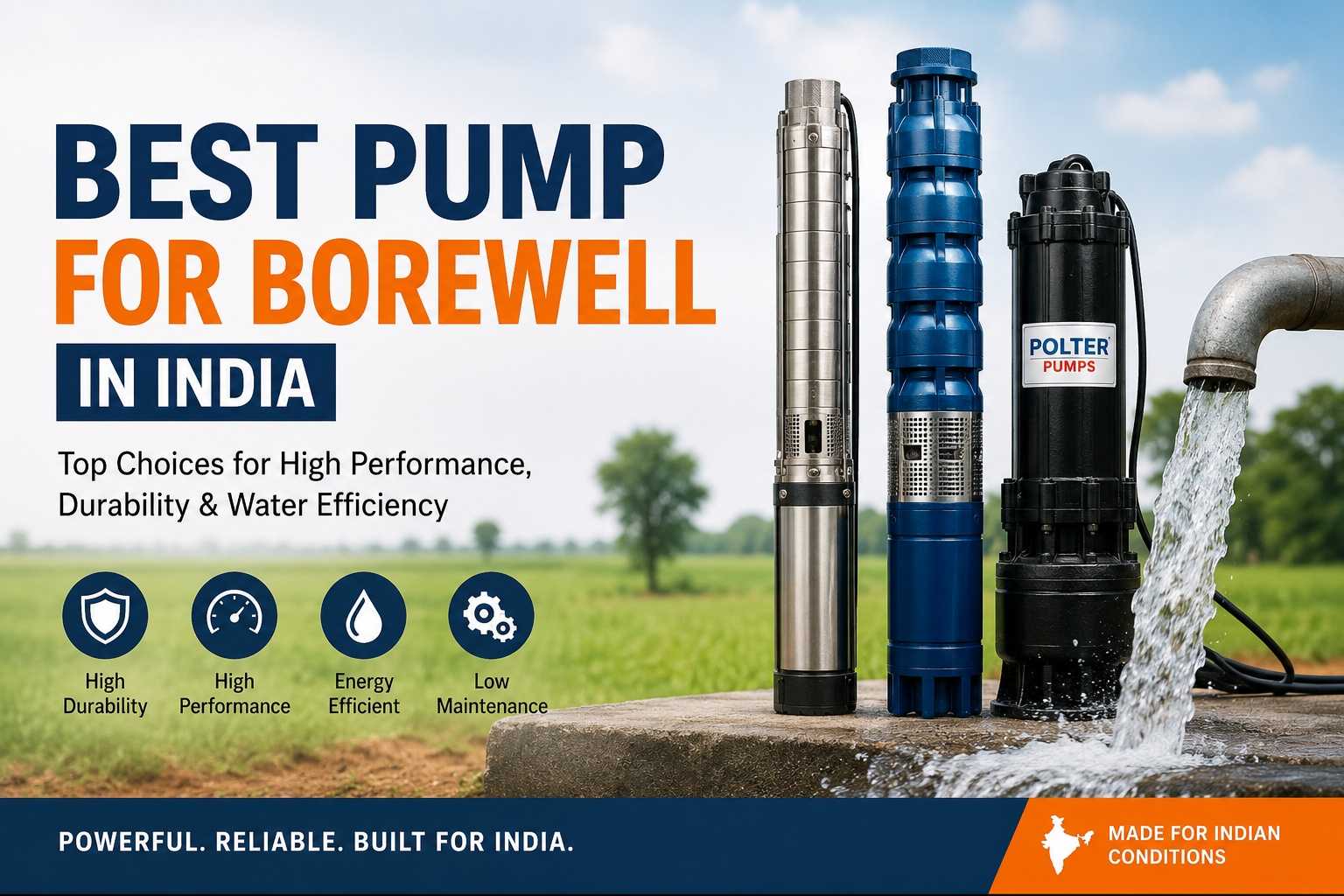
Best Submersible Pump for Borewell in Gujarat and Delhi NCR
Not sure which submersible pump suits your borewell? Here is a simple guide covering borewell depth,...
Read More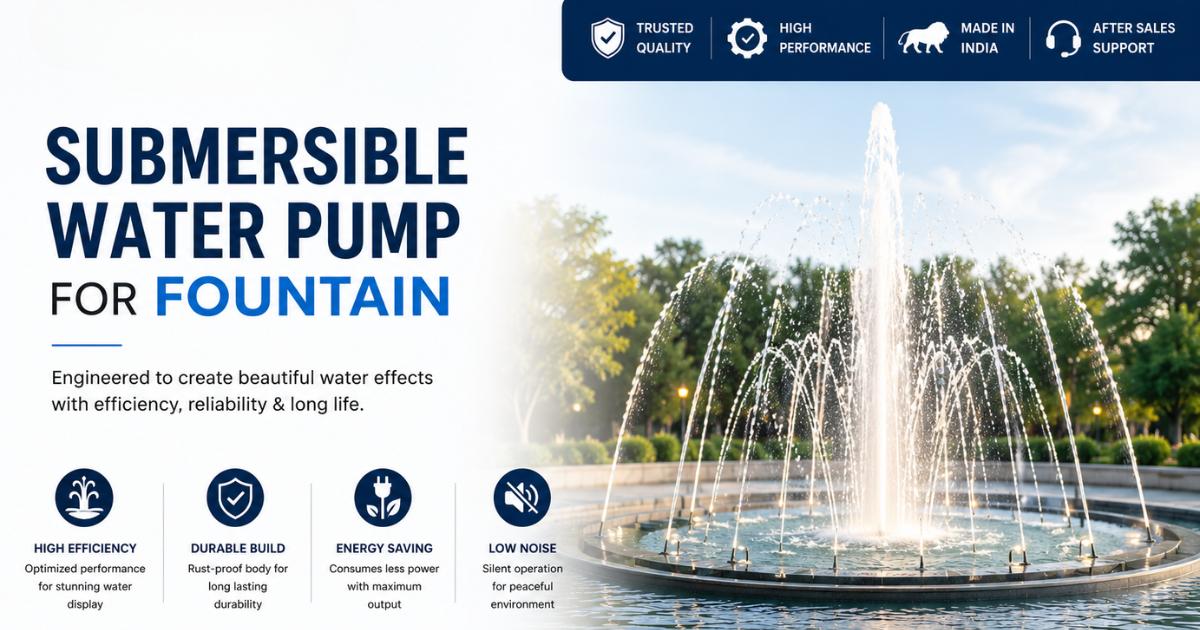
Whether it's a small tabletop fountain, a decorative garden feature, or a large landscaped water body, the pump is what brings it to life. Choose the wrong one, and you'll end up with weak, uneven flow, a noisy motor, or a pump that burns out within months of constant running. Fountain pumps run for hours every day — often continuously — so reliability matters even more here than in many other pump applications.
This guide covers exactly what to look for in a submersible pump for a fountain, how to size it correctly, and how to keep it running for years. You can also browse our full range of pumps here to compare options.
Unlike surface pumps, a submersible pump sits directly inside the water body — the fountain basin, pond, or tank — fully submerged while it runs. This has a few natural advantages for fountain use:
This determines how much water moves through your fountain per hour, which directly affects the height and strength of the water jet or spray pattern. A small tabletop fountain might need as little as 200–400 LPH, while a mid-sized garden fountain typically needs 1,000–2,000 LPH or more, depending on the number of jets and nozzles.
If your fountain has a tall jet or the water needs to be pushed up to an elevated spout, check the pump's maximum head rating. A pump rated for only 1 meter of lift won't produce a strong jet if your design calls for a 2-meter spray height.
Fountain pumps often run in standing water for months, sometimes with mineral deposits or algae buildup. A pump with a corrosion-resistant body and a sealed, waterproof motor housing will last significantly longer than a budget plastic unit exposed to the same conditions.
If your fountain is indoors or in a quiet courtyard, motor noise matters. Copper-wound motors with balanced impellers tend to run smoother and quieter than cheaper alternatives with lower-grade windings.
Not every pump is designed to run 24/7. Check that the pump you choose is explicitly rated for continuous operation — this is different from pumps designed for occasional or intermittent use, like some general-purpose water transfer pumps.
Polter Pumps builds submersible motors with copper winding and corrosion-resistant construction, designed to handle exactly the kind of continuous, standing-water duty that fountains demand. As an ISO 9001:2015 certified manufacturer with over two decades of experience, we build pumps that are engineered to run reliably for years — not just months — backed by a dealer network across Gujarat, Rajasthan, and Delhi NCR for genuine after-sales support. Explore our submersible pump range to find the right fit for your fountain, pond, or water feature.
Not sure which pump size suits your fountain design? Talk to our team — share your fountain's dimensions and jet height, and we'll help you pick the right model.
Buying Guide
Not sure which submersible pump suits your borewell? Here is a simple guide covering borewell depth,...
Read More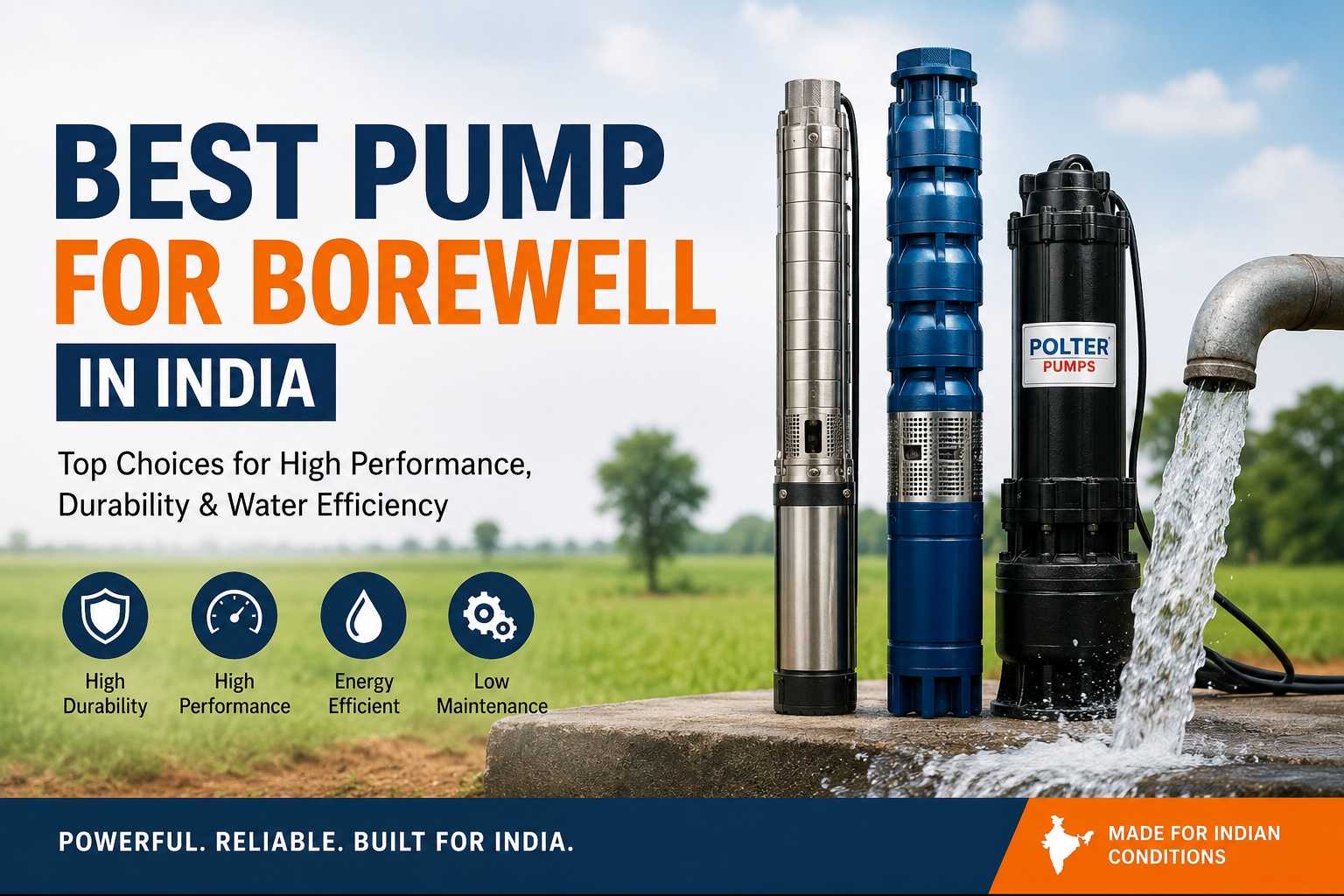 Buying Guide
Confused about which pump to buy for your borewell? Here is a simple, no-jargon guide to picking the...
Read More Buying Guide
Looking for solar pump manufacturers in Ahmedabad? Here is everything you need to know before buying...
Read More